
In our third season as a startup, the one thing everyone craves is what we lack the most: certainty. Every day brings a flood of small decisions and policies the team is eager to set in stone. My advice? Don’t rush.
Our flagship portfolio is next to “The” Ohio State University, home to the famous “Oval.” The landmark inspired how we chose to handle this kind of uncertainty. But first, let’s talk about something you likely didn’t know had a name.

A “desire path” is an unplanned walkway created by people naturally finding the shortest route between two points. If you’ve ever cut across grass to save time, you’ve either made a desire path or followed one. Officials try to discourage them with obstacles such as signs, landscaping, and fencing. However, fighting a good desire path is like fighting gravity. Gravity always wins.
If you’ve managed a team, you know how much energy goes into keeping people off the proverbial grass. I’ve watched senior leaders obsess for months over weekly reports that came in a few hours late. They could have simply adjusted the arbitrary deadline by a couple of hours to get 95% compliance. But they either didn’t see that option or felt they shouldn’t have to ‘move the sidewalks.’
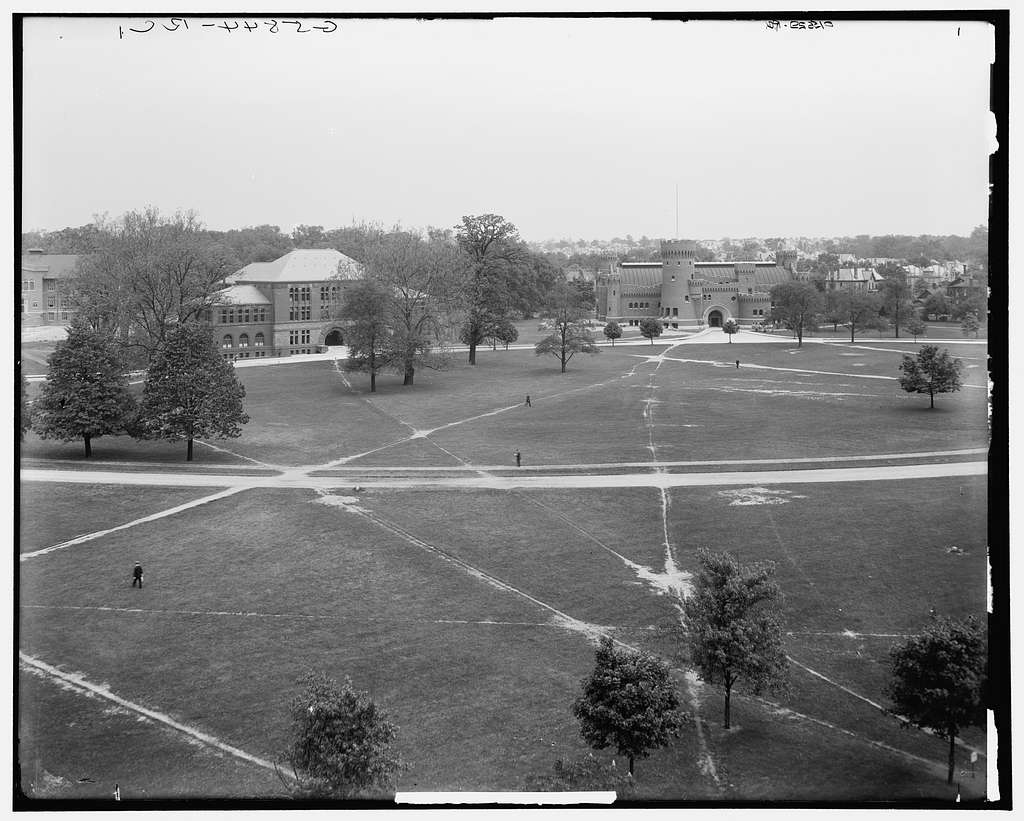
Back to Ohio State’s Oval
More than 100 years ago, The Oval had no sidewalks. Buildings were in place, and planners knew foot traffic would follow, and they had two choices:
- Construct walkways in a layout that looked aesthetically pleasing and was efficient to build.
- Let foot traffic shape the paths, then pave the most well-established ones.
Ohio State chose Option 2, as many campuses have since.
Option 1 is tempting. If you’re building something, why not finish it now by pouring the sidewalks? Waiting means muddy shoes, more building maintenance, and later construction disruptions. But Option 1 also forces you to assume you know something you don’t: the best places for walkways.
Option 2 is less comfortable—it requires patience and a willingness to admit you don’t have all the answers. But it lets the wisdom of the crowd emerge. If you do it right, you’ll end up with paths everyone will actually use and appreciate.
How This Applies to Your Business
Early in any venture, you’re figuring out who does what and how. Do you gather data on paper or through an app? What does the workflow look like? Does Peter send the TPS report to Linda or straight to the division head, Bill? You’ll experiment, try different solutions, and gradually see a well-worn path emerge. That’s when you pour concrete and lock the process in place.
You can see where I’m going with this.
Resist the urge to pour concrete before knowing where it’s needed. Have the courage and humility to accept that you can’t know everything from the start. It’s okay to wait if you’re waiting for a reason. Sketch a rough outline for now, but don’t pour the concrete until experience shows you the way.





 Robert H Myers
Leave a comment